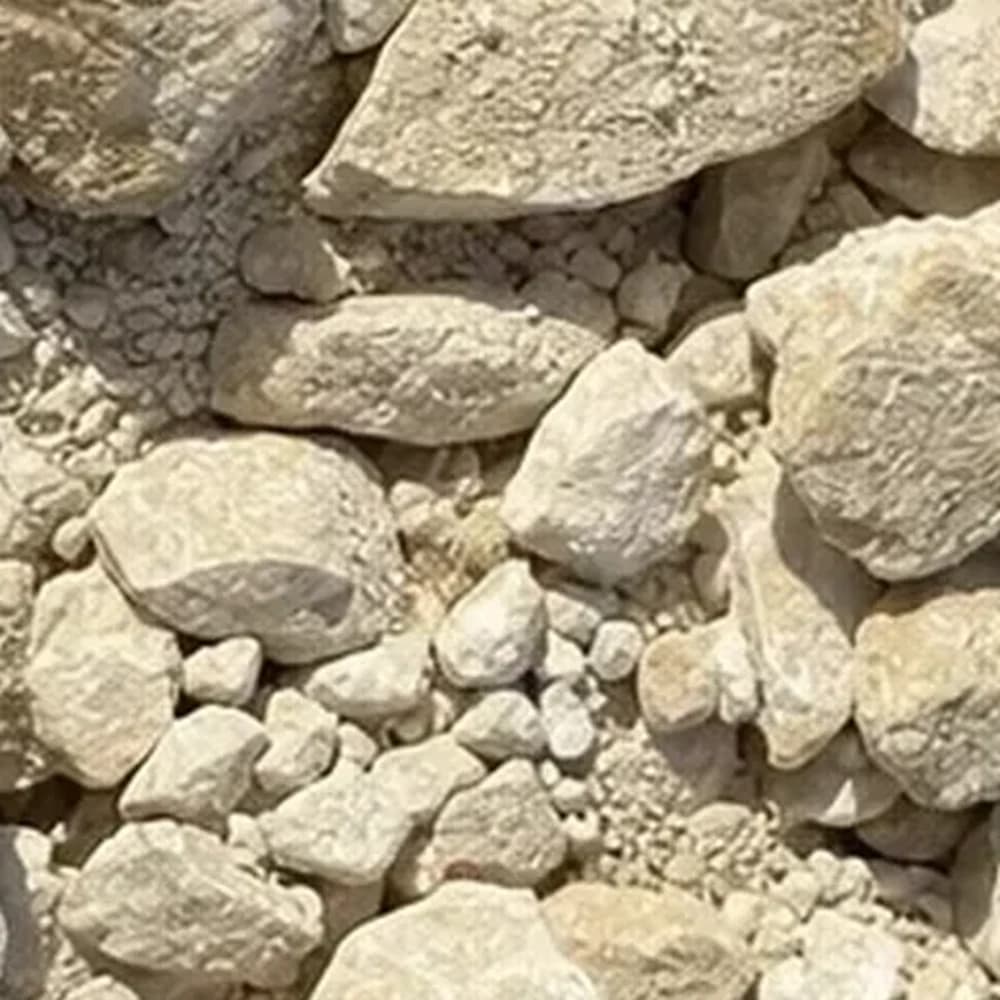
Crusher run calculator for Louisiana
A pavement-like base layer that should be ordered for its finished compacted thickness, not its loose depth.
Enter your project dimensions
Crusher run tightens by 10-15% during compaction compared with its loose truck depth. Measure the finished depth you need, since ordering only to that loose depth can leave the compacted base half an inch short. This calculator has the +10% allowance turned on for that reason. It may be called Crushed Concrete, recycled base, 610 concrete in Louisiana, or 2 inch minus on some tickets. These names describe the same type of material: crushed stone and fines together, weighing about 3,000 lb per cubic yard and forming a surface that resists tire movement.
Order for compacted depth
- Start with the footprint in feet: multiply a lane's length by its width, or enter the pad size.
- Use the compacted finish depth required for the job: 4 inches for pavers and paths, 4-6 beneath driveways, and 6-8 where trucks will travel.
- Find yards by dividing cubic feet by 27, then multiply yards by 1.5 to get tons. Leave the +10% enabled, since specifications refer to the rolled finish.
Tons of coverage
| Compacted depth | 1 cubic yard covers | 1 ton covers |
|---|---|---|
| 2 inches | 162 sq ft | ≈ 108 sq ft |
| 4 inches | 81 sq ft | ≈ 54 sq ft |
| 6 inches | 54 sq ft | ≈ 36 sq ft |
| 8 inches | 41 sq ft | ≈ 27 sq ft |
Uses and limits
- For a driveway, install 4-6 inches of compacted base and finish with 2-3 inches of #57 or driveway gravel as the driving course.
- Crusher run can form the travel surface on low-cost rural lanes. Dry summer conditions bring dust, and plan to regrade it every 2-4 years.
- Paver and slab bases use 4 inches placed and compacted in 2-inch lifts. Use the Paver Base Calculator for the complete paver buildup.
- For shed or hot-tub pads, place 4 inches on stripped ground and use 6 where soil is soft.
- Do not install it in a French drain. The fines help it bind but retain water, so drainage calls for clean #57 or drain rock.
Example: a 20 x 10 parking pad
For two hundred square feet at 4 inches after compaction, 200 x 0.333 = 67 cubic feet = 2.5 cubic yards, or 3.7 tons. With the allowance, order 4 tons. Place and compact half first, then place and compact the remaining half. Two 2-inch lifts last years longer than a single 4-inch layer, and renting a plate compactor for the afternoon costs less than repairing the first pothole. Ruts by the second delivery can reveal where compaction was skipped.
Delivery guidance
- Have the base material and surface stone delivered together to avoid interrupting the project schedule. Delivery is free either way.
- Put the pile at the end of the run, then work back from it as you spread. On large pads, moving downhill can save a full day.
- Lightly wet each lift before running the compactor. Damp crusher run binds tighter than dry material.
- Reserve a wheelbarrow-load for later patching. Crusher run is also used by road crews for potholes, and repairs will be needed.
How pricing works
Crusher run often costs less than washed, graded stone because it comes directly from the crushing process. Ordering extra can prevent a return trip: on a 4-ton order, the +10% allowance costs a few dollars and can avoid a separate half-ton delivery. See the Crusher Run product page for the per-ton price, compare Road Base, then order both driveway layers with one free delivery.
Crusher run, Crushed Concrete, recycled base, and 610 concrete: common questions
How much crusher run is required for a driveway?
What is the weight of a yard of crusher run?
How do crusher run and gravel differ?
Are crush and run and crusher run identical?
Can crusher run serve as the final surface?
How much does crusher run shrink during compaction?
Other calculators
Base tonnage calculated.
Crusher run by the ton, with free delivery.